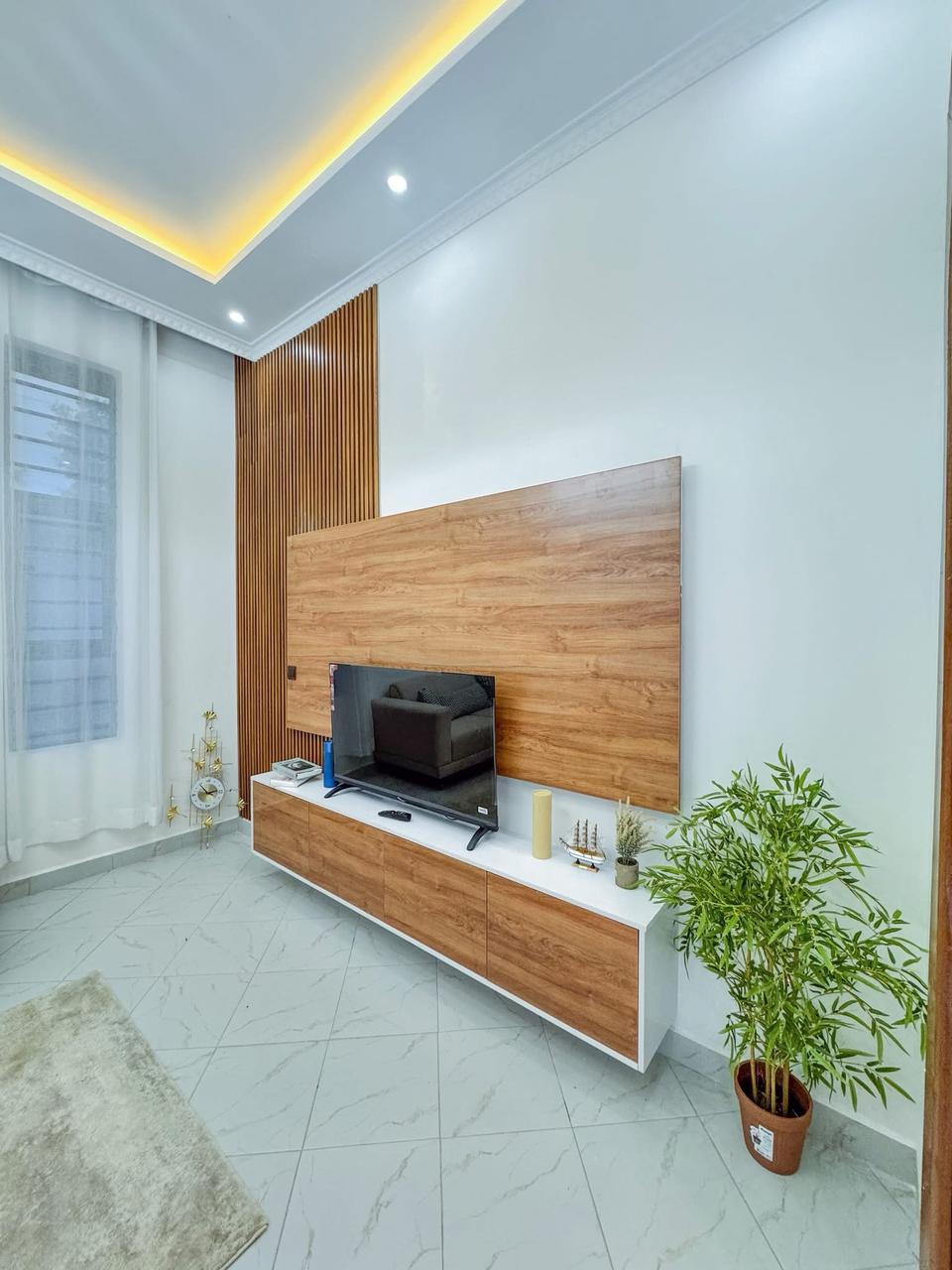
A developer can spend hundreds of millions of shillings constructing a beautiful apartment building.
The architecture can be impressive.
The finishes can be expensive.
The lobby can look luxurious.
The rooftop can have a swimming pool and a modern gym.
The marketing images can look spectacular.
And yet, when the apartments reach the market, something unexpected can happen.
Units take longer to sell.
Tenants negotiate heavily.
Some apartments remain vacant.
Buyers ask for features that were never considered during construction.
The developer begins asking:
"Why isn't the market responding the way we expected?"
Sometimes, the problem isn't the quality of the building.
The problem is that the building was designed without enough understanding of the customer.
This is why developers and landlords should consider speaking to experienced realtors before construction begins.
Not after the building is complete.
Not when the units are already on the market.
Before the first brick is laid.
The Realtor Has a Different View of the Market
Developers understand construction.
Architects understand design.
Engineers understand technical execution.
Quantity surveyors understand costs.
But realtors spend their days interacting directly with the people who ultimately determine whether a property succeeds in the market.
They speak to:
- Tenants
- Homebuyers
- Investors
- Landlords
- Diaspora buyers
- Corporate clients
- Property managers
- Other agents
Every day, these conversations generate valuable information.
A realtor hears things such as:
"I need a bigger kitchen."
"I don't want an apartment without a balcony."
"I need reliable water."
"I need two parking spaces."
"The service charge is too high."
"I want a three-bedroom apartment with all bedrooms ensuite."
"I need a children's play area."
"I would rather have a smaller apartment with a better location."
"I like the building, but the rooms are too small."
These conversations may appear insignificant individually.
But collectively, they reveal what the market actually wants.
Build What the Market Wants, Not What You Assume It Wants
One of the most expensive mistakes in property development is making decisions based entirely on assumptions.
A developer may think:
"Customers want expensive finishes."
But the customer may actually be saying:
"I want a practical layout, good natural lighting, reliable water, parking, internet and a reasonable service charge."
Those are two very different perspectives.
Luxury finishes may attract attention.
But functionality can determine whether someone actually signs the lease or purchase agreement.
The developer's job is not simply to create something beautiful.
It is to create something valuable to the intended customer.
What Should Developers Ask Realtors Before Building?
A conversation with experienced realtors before construction can help answer important market questions.
1. What Apartment Sizes Are Actually Moving?
Is the market demanding studios, one-bedroom, two-bedroom, three-bedroom or larger apartments?
And more importantly:
Which sizes are moving fastest within that particular location and price range?
Building 100 units of a particular configuration without understanding demand can create a serious mismatch between supply and customers.
2. What Layouts Do Customers Prefer?
Two apartments can have exactly the same number of bedrooms and completely different market appeal.
Customers may care about:
- Bedroom sizes
- Kitchen positioning
- Living room space
- Natural lighting
- Balcony size
- Storage
- Laundry areas
- Ensuite bedrooms
- Guest bathrooms
- Open-plan versus closed kitchens
The number of rooms is only part of the story.
How those rooms work together matters.
3. What Finishes Actually Matter to Customers?
Not every expensive finish creates equal value.
Developers should ask realtors what customers consistently notice and ask about.
For example:
- Kitchen cabinetry
- Countertops
- Bathroom fittings
- Floor finishes
- Wardrobes
- Windows
- Lighting
- Doors
- Appliances
- Sanitary fittings
The objective should not simply be to spend more.
It should be to spend intelligently.
The right finish can improve the property's appeal without unnecessarily increasing the development cost beyond what the market can support.
4. What Amenities Do People Actually Use?
Developers sometimes add amenities because they look impressive on a brochure.
But an amenity has a cost.
It requires construction, maintenance, security and management.
Therefore, developers should ask:
"Will our target customer actually value this amenity enough to pay for it?"
A gym may be important to one market.
A children's play area may be more important to another.
Reliable parking may matter more than a rooftop feature.
A co-working space may appeal to young professionals.
A large garden may matter more to families.
The answer depends on the customer.
5. What Are Customers Willing to Pay?
This is one of the most important questions.
A developer needs to understand the relationship between:
Construction Cost → Selling Price/Rent → Customer Demand
You can build a premium product.
But if the resulting selling price is far beyond what the target market can afford, the development becomes difficult to absorb.
Realtors can provide useful feedback from actual market conversations about:
- Asking prices
- Achievable prices
- Rental ranges
- Buyer budgets
- Negotiation patterns
- Competing developments
This information can help developers make more informed decisions.
6. What Are Tenants Complaining About?
Complaints are market research.
If tenants repeatedly complain about:
- Poor water supply
- Expensive service charges
- Insufficient parking
- Small kitchens
- Poor security
- Lack of storage
- Weak internet infrastructure
- Poor soundproofing
- Limited natural light
then developers should pay attention.
Every repeated complaint represents an opportunity to build something better.
7. What Are Buyers Rejecting?
The same principle applies to buyers.
Realtors often know why potential buyers walk away from a property.
It could be:
- The price
- Layout
- Location
- Finishing
- Service charge
- Parking
- Developer reputation
- Payment terms
- Building density
- Lack of amenities
Understanding these objections before construction can help developers avoid repeating the same mistakes.
Market Intelligence Can Save Millions
Imagine a developer is planning a 100-unit apartment development.
Before construction, they spend time speaking with experienced realtors who specialise in that particular neighbourhood.
They discover that the target market strongly prefers:
- Larger living spaces
- Practical kitchens
- More parking
- Reliable backup water
- High-speed internet
- Lower service charges
- Functional amenities
The developer adjusts the design.
Perhaps some decorative features are removed.
Perhaps more attention is given to parking.
Perhaps unit sizes are changed.
Perhaps the finishing budget is redirected toward areas customers actually value.
Those decisions can influence the property's ability to attract tenants and buyers for years.
Market research before construction is usually cheaper than correcting a market mismatch after construction.
This Is Especially Important in Competitive Nairobi Markets
In areas such as Kilimani, Kileleshwa, Lavington, Westlands and other established Nairobi neighbourhoods, customers have choices.
A tenant can compare multiple apartments.
A buyer can visit several developments.
An investor can compare rental yields.
When customers have options, developers cannot rely only on location.
They have to understand what makes their product compelling.
This is where continuous feedback from realtors can become extremely valuable.
Realtors Should Not Replace Architects or Developers
This point is important.
The realtor is not the architect.
The realtor is not the engineer.
The realtor is not the quantity surveyor.
The realtor should not determine structural design or technical specifications.
Their value is different.
They provide market intelligence.
Think of the development team as a group of different specialists:
Architect: How should we design it?
Engineer: How do we build it safely?
Quantity Surveyor: What will it cost?
Developer: How do we execute the project?
Realtor: What does the market actually want and what is it willing to pay?
When these perspectives come together early, the chances of creating a marketable product can improve significantly.
The Best Time to Talk to the Market Is Before Construction
Many developers bring realtors into the conversation when the building is already complete.
At that point, most important decisions have already been made.
The unit sizes are fixed.
The layouts are fixed.
The parking is fixed.
The amenities are fixed.
The finishes are largely fixed.
The only remaining question becomes:
"How do we sell it?"
But perhaps the more important question should have been:
"What should we build?"
That question needs to be answered much earlier.
Real Estate Development Should Start With the Customer
A successful property development is not simply about putting up a building.
It is about solving a customer's problem.
A tenant wants a home that fits their lifestyle and budget.
A buyer wants value, convenience and security.
An investor wants sustainable income and long-term value.
A family wants functionality and an environment suitable for their children.
A developer wants a profitable and sustainable project.
The best developments bring these interests together.
The Real Lesson for Developers and Landlords
Before you spend millions on construction, talk to the people who spend their days talking to your customers.
Ask the realtors:
What are tenants asking for?
What are buyers rejecting?
What layouts are moving?
What finishes matter?
What amenities are actually valued?
What price points are realistic?
What are competing developments doing better?
What problems are customers experiencing in existing buildings?
These answers can influence decisions long before the property reaches the market.
Because the most expensive mistake in real estate isn't always building badly.
Sometimes it is:
Building something the market never asked for.
Conclusion
Real estate development should not begin with a blueprint.
It should begin with understanding the market.
The blueprint should translate that understanding into a physical product.
Developers who listen to the market early have an opportunity to build properties that are not only attractive but also functional, competitive and relevant to the people they intend to serve.
Realtors have a unique position in this process because they are constantly exposed to the voice of the customer.
Architects design.
Engineers build.
Developers execute.
Realtors listen to the market.
When these professionals work together before construction begins, the result can be a development designed not merely to impress people—but to actually serve them.
Build with the customer in mind, not just the blueprint.
Author: Ochieng Wycliffe | Real Estate Consultant
Helping developers and investors make smarter property decisions.
Frequently Asked Questions
Why should property developers talk to realtors before construction?
Realtors interact regularly with buyers, tenants and investors. They can provide practical market feedback on preferred unit sizes, layouts, finishes, amenities, pricing, rental demand and common customer objections.
What information can a realtor provide to a property developer?
A realtor can provide insight into tenant and buyer preferences, competing properties, rental rates, selling prices, unit configurations, customer objections, amenities, property features and market demand.
Can realtors influence the design of an apartment?
Realtors should not replace architects or engineers, but their market feedback can help developers understand which layouts, unit sizes, features and amenities are likely to appeal to the intended customer.
What should developers consider before building apartments in Kenya?
Developers should study the target market, location, demand, competing supply, customer budgets, unit sizes, layouts, amenities, parking requirements, finishes, operating costs, service charges and expected rental or selling prices.
Why is market research important in real estate development?
Market research helps reduce the risk of developing a property that does not match customer demand. Understanding the market before construction can allow developers to make better decisions about design, pricing, unit mix and features.
What is the role of a realtor in property development?
A realtor can act as a source of market intelligence by communicating what buyers, tenants and investors are currently looking for, what they are willing to pay and why they reject competing properties.
Should landlords talk to realtors before building rental apartments?
Yes. Landlords planning rental developments can benefit from understanding tenant preferences before construction. This can help them make informed decisions about unit layouts, finishes, amenities, parking and other features that influence rental demand.
What is the biggest mistake property developers make?
One major mistake is developing a property based primarily on assumptions rather than validated market demand. A development can be technically excellent but commercially difficult if it does not solve the needs of its intended customers.