Investment Summary
Westlands sits at the intersection of Nairobi’s most mature capital flows and its most disciplined planning controls. In 2026, this submarket is no longer driven by speculative upside but by liquidity, institutional absorption, and regulatory clarity. The persistent narrative of a “Nairobi apartment bubble” fails to hold when examined through Westlands’ absorption rates, tenant quality, and capital recycling patterns.
Westlands should be classified in 2026 as:
BUY for Mixed-Use Yield | HOLD for Capital Preservation | SELECTIVE for Residential Exposure.
Demand is anchored by multinational occupiers, regional headquarters, embassies, serviced apartment operators, and a high-income rental class with limited substitutes. Price growth has moderated, but exit optionality remains superior to most Nairobi neighborhoods due to zoning certainty, infrastructure saturation, and institutional familiarity.
Macro–Micro Capital Flow Analysis
Kenya’s urban GDP contribution continues to concentrate within Nairobi’s western corridor. Westlands benefits disproportionately from this consolidation due to its established commercial identity and global brand recognition among diaspora investors.
Currency volatility in the KES has paradoxically supported Westlands real estate. Diaspora buyers benchmark value in USD or GBP, viewing stabilized Westlands assets as currency hedges rather than speculative plays. This has shifted demand toward completed or near-completion mixed-use projects with predictable cash flow.
At the micro level, capital is rotating away from fringe densification zones and into planning-secure districts. Westlands’ mature sewer lines, road hierarchy, and power redundancy reduce execution risk, which explains why institutional capital accepts lower headline yields here compared to emerging nodes.
Neighborhood Deep-Dive: Westlands Core
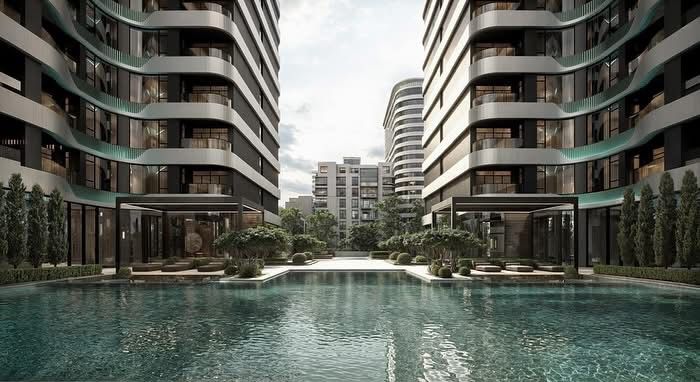
Westlands’ operational spine runs along Rhapta Road, Waiyaki Way, Chiromo Road, and Westlands Road. The post-Global Trade Centre (GTC) phase has redefined the area from a development hotspot into an operational CBD extension.
Developer behavior has shifted notably since 2023:
-
Unit sizes are increasing modestly to favor executive tenants.
-
Parking ratios are tightening toward compliance rather than excess.
-
Mixed-use podiums are prioritized over standalone residential blocks.
One persistent friction remains traffic congestion during peak hours, which has indirectly boosted demand for walkable mixed-use developments and serviced apartments within core Westlands.
Inventory analysis shows:
-
Oversupply risk in generic one-bedroom apartments without ESG or parking advantages.
-
Sustained demand for two-bedroom executive units and serviced apartments.
Rental demand quality in Westlands is income-secure and contract-based, reducing default and vacancy volatility.
Zoning, FAR, and Infrastructure Impact
The 2026 Nairobi zoning framework formally caps speculative densification in Westlands. Select corridors permit higher FARs, but approvals are increasingly conditional on traffic mitigation, sewer capacity, and parking compliance.
This has effectively created a regulatory ceiling that protects existing compliant assets. The Nairobi Expressway has already been capitalized into land values; its role is now a baseline enabler rather than a growth driver.
Second-order infrastructure influences include improved connectivity to Upper Hill and Parklands, reinforcing Westlands’ role as a cross-functional business district.
Financial Modeling and Yield Analysis
Westlands rental yields in 2026 reflect stabilization rather than expansion. Conservative underwriting is essential.
Table 1: Unit Economics (Indicative)
| Unit Type | Purchase Price (KES) | Monthly Rent (KES) | Gross Yield |
|---|---|---|---|
| 1-Bed Apartment | 13.5M | 110,000 | 9.8% |
| 2-Bed Apartment | 18.5M | 150,000 | 9.7% |
| Serviced Apartment | 22.0M | 190,000 | 10.4% |
After management, property tax (0.3%), and maintenance, net yields compress to 6.5–7.2%.
Table 2: Capital Appreciation Trend (2021–2025)
| Year | Avg Price Growth |
|---|---|
| 2021 | 6.8% |
| 2022 | 7.5% |
| 2023 | 4.9% |
| 2024 | 3.8% |
| 2025 | 3.2% |
The trend indicates normalization rather than decline.
ESG, Technology, and Liquidity Moat
Institutional buyers increasingly screen for EDGE compliance, backup power, water redundancy, and smart access systems. In Westlands, ESG-aligned buildings achieve:
-
5–8% rent premiums
-
Shorter resale periods
-
Stronger tenant retention
These features are no longer optional for liquidity preservation.
Investor Risk Matrix
-
Liquidity Risk: Low, due to diversified buyer pool.
-
Regulatory Risk: Moderate but declining as zoning stabilizes.
-
Airbnb Saturation Risk: High in non-differentiated buildings.
-
Fiscal Drag: Manageable but requires longer holding periods.
Risk mitigation favors compliant mixed-use assets with professional management.
Reach Out and Let Us Schedule a Portfolio Risk Review for Nairobi Assets
📞 0713595863 | 0722506632