The investment thesis for Kilimani has undergone a fundamental transformation. For the better part of a decade, Kilimani was marketed as a "vibrant" residential suburb. By 2026, that narrative has been discarded by serious institutional analysts in favor of a more clinical reality: Kilimani is now a high-velocity, high-density vertical city. It has become the primary financial instrument for investors seeking aggressive cash flow and dollar-denominated returns within the Nairobi residential sector.
However, as the market matures, the "blind-buy" era has ended. Investing in Kilimani today requires a forensic understanding of yield compression, the 2026 regulatory landscape, and the shifting demographic of the Nairobi tenant. To answer whether Kilimani is a "good" place to invest, we must move past the promotional hyperbole and examine the data-driven mechanics of the suburb.

1. The Regulatory Moat: The Sectional Properties Act 2026
The most significant driver of Kilimani’s investment appeal in 2026 is the full implementation of the Sectional Properties Act. In previous years, apartment ownership was often shrouded in the ambiguity of long-term leases and "mother titles." This lack of transparency acted as a ceiling on liquidity and investor confidence, particularly for the Kenyan diaspora.
The Transition to Sectional Titles
In 2026, the conversion from leases to individual sectional titles is a mandatory requirement for any property transaction. For the investor, this has created a "Regulatory Moat." A sectional title provides an absolute, georeferenced claim to a specific unit and a proportional share of the common areas. This has digitized the due diligence process through the Ardhisasa platform, allowing an investor in London or Dubai to verify the legal status of a Kilimani apartment in real-time.
Increased Exit Liquidity
Legal clarity directly correlates with liquidity. Units in Kilimani that are compliant with the 2026 Act are now more easily financed by Tier 1 banks. This means that when it comes time for you to exit your investment, the pool of potential buyers is significantly larger. The "legal risk" that previously suppressed prices in high-density areas has been largely mitigated, providing a more stable foundation for capital preservation.
2. The Yield Thesis: Cash Flow vs. Capital Appreciation
To determine if Kilimani is a "good" investment, we must define the objective. In the 2026 Nairobi market, Kilimani is rarely a play for massive capital appreciation; it is a play for High-Velocity Cash Flow.
Rental Yield Dominance
Kilimani remains the undisputed leader in rental yields within Nairobi’s "Golden Triangle." While Westlands attracts the ultra-premium corporate lease and Lavington serves the family-oriented long-term tenant, Kilimani captures the high-turnover, high-yield segment.
The proliferation of studios and one-bedroom units has allowed for a higher rent-per-square-meter ratio than any other suburb. In 2026, a well-managed short-stay (Airbnb) unit on Kindaruma Road or Wood Avenue can deliver gross yields that significantly outperform the 10-year Treasury bond. However, this high gross yield is often tempered by operational leakage, which we will address later in this audit.
The Capital Appreciation Ceiling
Investors must be realistic about price growth. Because Kilimani has seen such aggressive vertical densification, the sheer volume of supply has placed a "ceiling" on how fast prices can rise. In 2026, capital appreciation in Kilimani has stabilized at a modest rate that tracks slightly above inflation. If your primary goal is to "flip" a property for a 50% profit in three years, Kilimani is likely not your asset class. If your goal is to generate a monthly dollar-hedged income stream, it is an exceptional choice.
3. The Short-Stay Economy and the Professionalization of Management
In 2026, Kilimani is the heart of Nairobi’s "Short-Stay Economy." The suburb has officially become the preferred landing zone for regional business travelers, digital nomads, and the diaspora returning for short visits.
The Hospitality Pivot
Many investors in Kilimani have pivoted from being traditional landlords to becoming hospitality providers. The demand for "Serviced and Furnished" units has created a niche where the rental income is double or triple that of an unfurnished unit. However, the 2026 market is no longer hospitable to the "amateur" host.
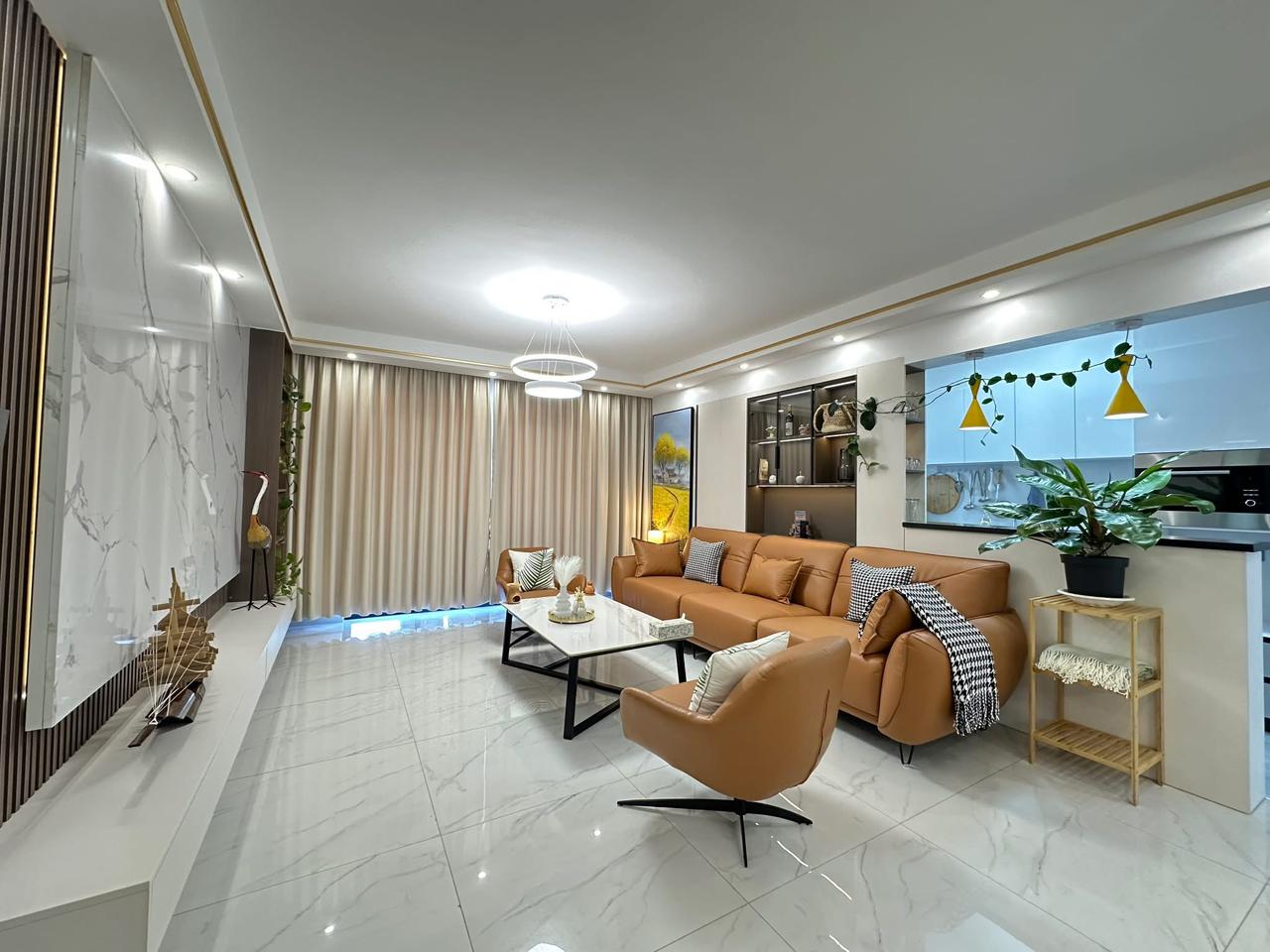
Tenants today demand high-speed fiber-to-the-home (FTTH), biometric security, and professional cleaning services. Developments that were designed with "Hotel-Grade" amenities—such as concierge desks, residents' lounges, and integrated laundry services—are seeing the highest occupancy velocity.
The Rise of Third-Party Facility Managers
The successful Kilimani investor in 2026 is often a "passive" one, utilizing professional facility management firms. These firms handle everything from tax compliance and utility payments to guest vetting. While their fees (often ranging from 15% to 20% of gross revenue) eat into the yield, they ensure the asset's longevity and minimize the "Management Friction" that often discourages overseas investors.
4. The Risk of Commoditization: Supply vs. Specification
One of the primary risks in Kilimani for 2026 is Commoditization. With so many developers following the same "High-Rise Studio" blueprint, many units have become indistinguishable from one another.
The Spec-War
In a commoditized market, the only differentiator is price, which leads to a "Race to the Bottom." To avoid this, the "Good" Kilimani investment is one that breaks the mold. We are seeing a shift toward "Boutique" developments—blocks that offer more than just a place to sleep. Features that were once considered luxuries, such as full-load backup generators, heated pools, and high-speed elevators (at least three per block), are now the baseline.
The Location Premium within Kilimani
Proximity to retail anchors remains the strongest defense against commoditization. A unit that is a 2-minute walk from Yaya Centre or Adlife Plaza will always command a premium over a unit 2 kilometers away on a congested side-street. In 2026, we are advising investors to focus on the "Walking Score" of a property. If a tenant doesn't need a car to access groceries, banking, and dining, your vacancy risk drops significantly.
5. Infrastructure and the Connectivity Dividend
The 2026 Kilimani investment case is heavily bolstered by infrastructure. The completion of the Nairobi Expressway and the modernization of arterial roads like Argwings Kodhek and Lenana Road have integrated Kilimani into the city’s primary transport corridors.
The Expressway Impact
Kilimani is now 15 minutes from the UN/Gigiri diplomatic zone and 20 minutes from JKIA via the Expressway. This has expanded the potential tenant pool to include international consultants and diplomats who previously found the commute to be a deal-breaker. This "Connectivity Dividend" has provided a floor for rental prices, even in the face of increased supply.
The 15-Minute City Aspirations
Kilimani is the closest thing Nairobi has to a "15-minute city." The ability to work, play, and live within a small radius is a massive draw for the Gen Z and Millennial workforce. As traffic congestion in greater Nairobi continues to worsen, the premium on centrally located hubs like Kilimani will only grow.
6. Financial Leakage: Tax, Service Charge, and Utilities
A "Good" investment is only as good as its net return. In 2026, investors must be vigilant about "Fiscal Leakage."
-
The 7.5% Monthly Rental Income (MRI) Tax: The KRA has automated the collection of this tax. It is a direct deduction from your gross rent that must be factored into your ROI calculations.
-
The 0.3% Annual Property Tax: The Nairobi City County’s new valuation roll has increased the property tax burden. While manageable, it is a recurring holding cost that affects your net cash flow.
-
Service Charge Inflation: High-spec buildings with multiple elevators and heated pools carry high maintenance costs. In 2026, service charges in Kilimani can range from KES 10,000 to KES 25,000 per month.
When analyzing a Kilimani property, we look for buildings with efficient management structures. A building with poorly managed utilities or an unfunded sinking fund is a liability, not an asset.
7. The Exit Strategy: Who Will Buy Your Asset in 10 Years?
The final component of the "Is it a good investment?" question is the exit strategy. In 2026, the secondary market in Kilimani is robust for one and two-bedroom units.
The primary buyer for these units in the future will be:
-
First-Time Home Buyers: Young professionals looking for an entry-point into the property market.
-
Portfolio Investors: HNWIs looking to build a "Rent-Roll" of high-yield units.
-
The Emerging Middle Class: Seeking a "pied-à-terre" in the city while living in the outskirts.
Because the entry price remains relatively accessible compared to Westlands or Lavington, Kilimani assets are among the most liquid on the resale market.
8. The Clinical Verdict: Is Kilimani a Good Place to Invest?
In 2026, our verdict is a Qualified Yes.
Kilimani is a "Good" place to invest if you are seeking Cash Flow, Liquidity, and Ease of Management. It is an exceptional market for the diaspora who wants a secure, yield-generating asset that can be managed remotely.
However, Kilimani is a "Bad" place to invest if you are seeking a quiet, low-density residential environment or rapid capital appreciation. The market has moved on from being a suburb; it is now a commercial-residential hub.
Strategic Recommendations for 2026:
-
Prioritize Titling: Only buy units with a verified path to a Sectional Title.
-
Focus on Micro-Locations: Stay within the walking radius of Yaya Centre, Adlife, or Prestige Plaza.
-
Vet the Management: The facility manager is as important as the developer.
-
Diversify Typology: A high-spec 1-bedroom unit often has better "Yield Velocity" than a large, overpriced 3-bedroom unit in this specific suburb.
We provide the data, the analysis, and the clinical due diligence required to navigate the Nairobi real estate market. We don't sell "homes"; we architect investment portfolios. In 2026, the winners are those who buy based on data, not dreams.
Ready to perform a deep-dive audit on a specific Kilimani development?
Book an Investment Strategy Session with Ochieng Wycliffe: 0713595863 | 0722506632